Brewing is a biological process, but the hardware around that biology determines whether it succeeds. Fermentation equipment is the operational core of any serious brewery not passive storage, not a holding tank, but a process system where temperature gradients, pressure dynamics, and surface chemistry all affect what ends up in the glass.
Once your wort leaves the brewhouse and moves into the fermentation vessel, the real heavy lifting begins. The yeast pitch rates, oxygen levels, and temperature control during those first 12-18 hours basically decide the entire personality of your beer. If your equipment can't hold a steady temperature within +0.5°C, or if there are tiny, rough spots in the welds where microbes can hide, you're in trouble. It doesn't matter how perfectly you handled your mash upstream; those small technical failures will derail the final flavour every single time.
Prodeb builds fermentation equipment for brewers who take process control seriously.
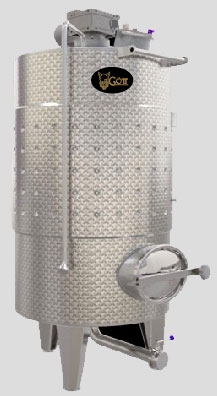
Characteristics of Prodeb Fermentation Equipment
Alloy Selection and Surface Finish
Prodeb builds fermentation vessels from 304 stainless steel as standard, with 316L available for operations dealing with high chloride water or aggressive cleaning chemistries. The difference is not academic: 316L's molybdenum addition gives it substantially better resistance to pitting corrosion in environments where 304 would begin to degrade after repeated exposure.
Internal surface finish matters more than most equipment buyers initially expect. A poorly finished interior is not just an aesthetic issue it is a contamination risk. Prodeb applies a type 8B mirror polish to all internal walls, achieving Ra values that eliminate the micro crevices where Pediococcus, Lactobacillus, and wild yeast can establish colonies between production cycles. CIP protocols only work when the surface lets them work.
Conical Geometry
The standard 60 degree conical bottom is specified because it handles clean yeast harvesting across the widest range of strains and fermentation temperatures. Shallower angles compact yeast into a mass that resists clean collection; steeper angles add height without benefit. Prodeb offers alternative cone angles for specific process requirements, but the 60 degree standard is the right starting point for most applications.
Fixed stainless steel legs with adjustable feet, and notably among the largest leg diameters in the industry. Load distribution from a full tank at operating volume is not a trivial engineering consideration once vessel sizes exceed 10 BBL wide legs handle it correctly.
Key Features of Prodeb Fermentation Equipment
Glycol Jacket Design
Every stainless steel fermentation tank in the Prodeb line uses preformed dimple pattern cooling jackets built within the cladding. Dimple jackets produce turbulent glycol flow at lower operating pressures than alternative designs, which translates to better thermal contact across the jacket surface and faster recovery from temperature deviations.
Multi zone configurations separate jacket circuits for the shell and cone let brewers run different temperatures in different parts of the vessel. This is useful during lager conditioning, where lower cone temperatures encourage yeast flocculation without cold shocking the beer above. Shell and cone are both insulated and clad as standard; the insulation carries the baseline thermal load and the glycol system handles fine control on top of it.
Pressure Management
The shadowless manway provides full interior access without blind spots, useful both for visual inspection and for manual cleaning when CIP coverage is incomplete. The stainless steel pressure and vacuum relief valve is sized per vessel volume it prevents over pressurization during active fermentation and vacuum collapse during CIP cooldown cycles. For isobaric fermentation, where carbonation develops under pressure rather than through forced carbonation post fermentation, these specifications are built into the vessel from the start rather than addressed through modifications.
The Perlick sample valve allows hygienic mid fermentation sampling without breaking the manway seal or releasing pressure. Brewers running close fermentation monitoring tracking gravity drops and sulfur evolution day by day will use this valve constantly.
CIP Integration
CIP spray ball coverage on every beer fermenter Prodeb builds is specified to reach all internal surfaces including the cone. This sounds like a minimum requirement, and it is but it is frequently missed in cheaper fabrication where spray coverage terminates at the cylindrical shell and leaves the cone to manual cleaning.
Applications of Fermentation Equipment
The same vessel geometry that handles an aggressive ale fermentation at 18°C will, with appropriate jacket programming, run as a lagering tank at 0-2°C for several weeks. The pressure management system that handles normal CO&sub2; evolution can, with the appropriate valve configuration, support high pressure fermentation for naturally carbonated styles. This range is why well specified fermentation equipment justifies the investment the vessel works across processes rather than being purpose built for one.
Prodeb supplies fermentation vessels to breweries from 3 BBL craft operations up to large scale production facilities. The engineering requirements thermal uniformity, sanitary design, structural integrity do not change with scale, though fabrication specifications are recalculated for each volume. A nano brewery running small seasonal batches has different throughput and cleaning demands than a regional contract brewer; the fermentation vessel specifications reflect that.
Bright beer tanks, high gravity fermentors, and pressurized unitanks are all part of the range. Configured correctly, each functions as both a beer fermenter and a conditioning and carbonation vessel, reducing the number of transfers required and the associated oxygen pickup risk.
Why Choose Prodeb Fermentation Equipment?
Prodeb's reputation as a brewery equipment manufacturer is built on fabrication quality. Every fermentation vessel leaves the facility after pressure testing and weld inspection. TIG welds on the interior are ground and polished to the same Ra specification as the parent material a step that adds production time and is frequently skipped by lower cost manufacturers. The difference shows up in cleanability and corrosion resistance over years of use, not in the first few cycles.
The full equipment range brewhouses, bright tanks, glycol systems is designed to work together. For breweries evaluating a brewery equipment manufacturer for a complete installation, this matters: control systems, piping specifications, and CIP chemistries are considered in the context of the full process rather than specified vessel by vessel. Options inventory for common wear items and fittings is maintained to support fast replacement when something needs attention mid production.
Frequently Asked Questions
1. What is the ideal cooling temperature for a beer fermenter?
It depends on the yeast strain and style. Ale strains typically run 15-22°C; lager strains ferment between 8-14°C and condition at 0-2°C. Prodeb's glycol jacket systems maintain these ranges via thermocouple feedback, with thermos control brackets available for integration into brewery automation.
2. How do you clean a stainless steel fermentation tank between batches?
Standard protocol is a hot caustic wash at 1–2% concentration, followed by an acid rinse and a peracetic acid sanitization. The CIP spray balls and polished interior on Prodeb fermentation equipment are specified to make these cycles effective within normal dwell times. Periodic inspection of spray ball coverage and valve seals is also worth scheduling.
3. What are the options when scaling up fermentation vessel capacity?
Prodeb builds fermentation vessels across a wide volume range. Core specifications jacket configuration, cone angle, surface finish stay consistent as vessels scale up. Structural and leg specifications are recalculated per volume. Probe wells, sight gauges, and additional sample valves can be added at order or retrofitted.
4. How does Prodeb stand out for complex fermentation equipment projects?
For multi vessel installations or operations with specific process requirements isobaric fermentation, high gravity work, mixed conditioning regimes Prodeb works through the process design before specifying equipment. Weld inspection, internal polish, and pressure testing are included in the standard build, not priced separately.
5. What options can be added to a Prodeb fermentation vessel?
Thermometer wells, probe wells, sight gauges, and thermos control brackets are available as add ons. These are particularly relevant for brewers running active monitoring protocols or integrating fermentation equipment into a broader process control system.